
The government accepted the majority of the 2025/26 pay awards recommended by Pay Review Body (PRB).
In the Economic Evidence to the Pay Review Bodies 2026-27 Pay policy paper, the government said it has continued to make progress on delivering more timely pay awards, having delivered both the 2025-26 pay awards and remitted the 2026-27 pay round two months earlier than the previous year.
Average public sector pay growth in April 2025 was 5.8% and was at a similar level the previous three years.
All workers are entitled to be paid at least the National Minimum Wage (NMW). In 2024 Institute for Fiscal Studies has said that the NMW has supported pay growth for lower earners, particularly in the public sector.
Labour market context.
Estimates of employment growth have diverged significantly across sources. The ONS advises caution when interpreting changes in Labour Force Survey (LFS) estimates, as falling response rates and recent changes to data collection and sampling methods have affected the reliability of the data. The ONS recommends using a range of different sources to assess the labour market, including Real Time Information (RTI) and Workforce Jobs data.
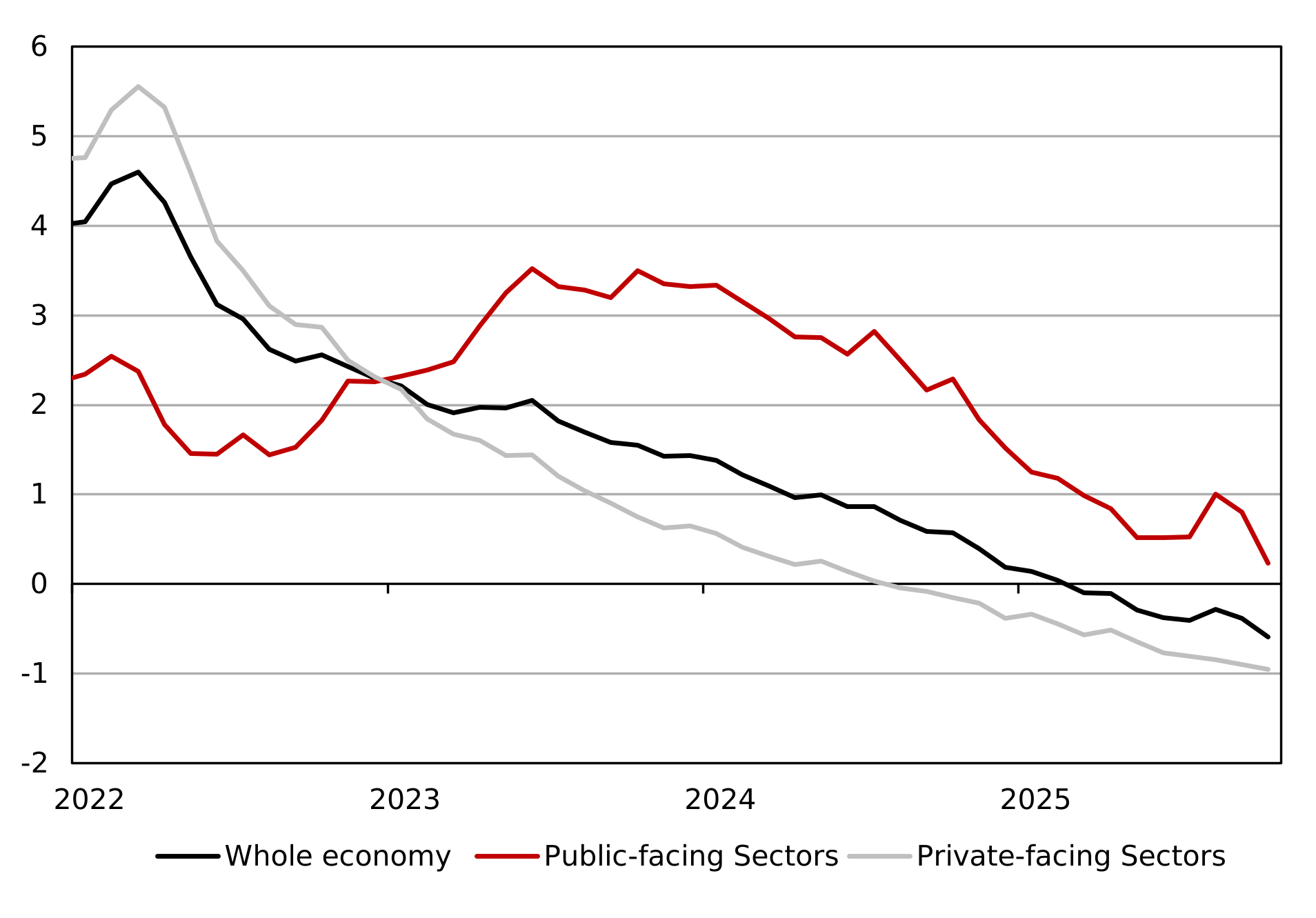
Labour market conditions have loosened. His Majesty’s Revenue & Customs (HMRC) RTI data, which provide a reliable and timely measure of payrolled employees, shows that employee numbers have fallen by 0.6% since October 2024. This compares to an increase of 0.6% between October 2023 and October 2024.
The decline in employees has been driven by private-facing sectors, with the number of employees in these sectors declining by 0.9% in the year to October 2025. Employee growth has remained positive in public-facing sectors, although the rate of growth has declined gradually (Figure 3.A). The Bank of England’s measure of underlying employment, estimated using monthly survey indicators, suggests that three month on three month growth in employment was close to 0% in October 2025.
Figure 3.A RTI employee growth (% change on year)
How public sector pay is determined
The mechanism varies across the public sector:
- Pay awards for about 45% of the public sector – including the armed forces, the police, teachers, the Senior Civil Service and the NHS – are decided by government ministers and based on the recommendation of eight Pay Review Bodies (PRBs).
- Pay awards for the Civil Service are decided by individual departments based on guidance issued by the Cabinet Office.
- Pay awards for local government workers are agreed in negotiations between employers and trade unions through the National Joint Council for Local Government Services.
- For devolved public sector bodies, pay policy is set by the devolved administrations.
Trends in public sector pay
In April 2025, median weekly earnings for full-time employees in the public sector were 7% higher than those in the private sector. The gap had been narrowing before the pandemic but increased again in 2020, partly because of the private sector’s greater use of furlough (when employees were paid 80% of their usual salary while they were unable to work during lockdowns). The gap has been narrowing again since 2021 and it has remained at 7% over the last two years.
According to the LFS, the unemployment rate has risen from 3.6% in the three months to August 2022 to 5.0% in the three months to September 2025.
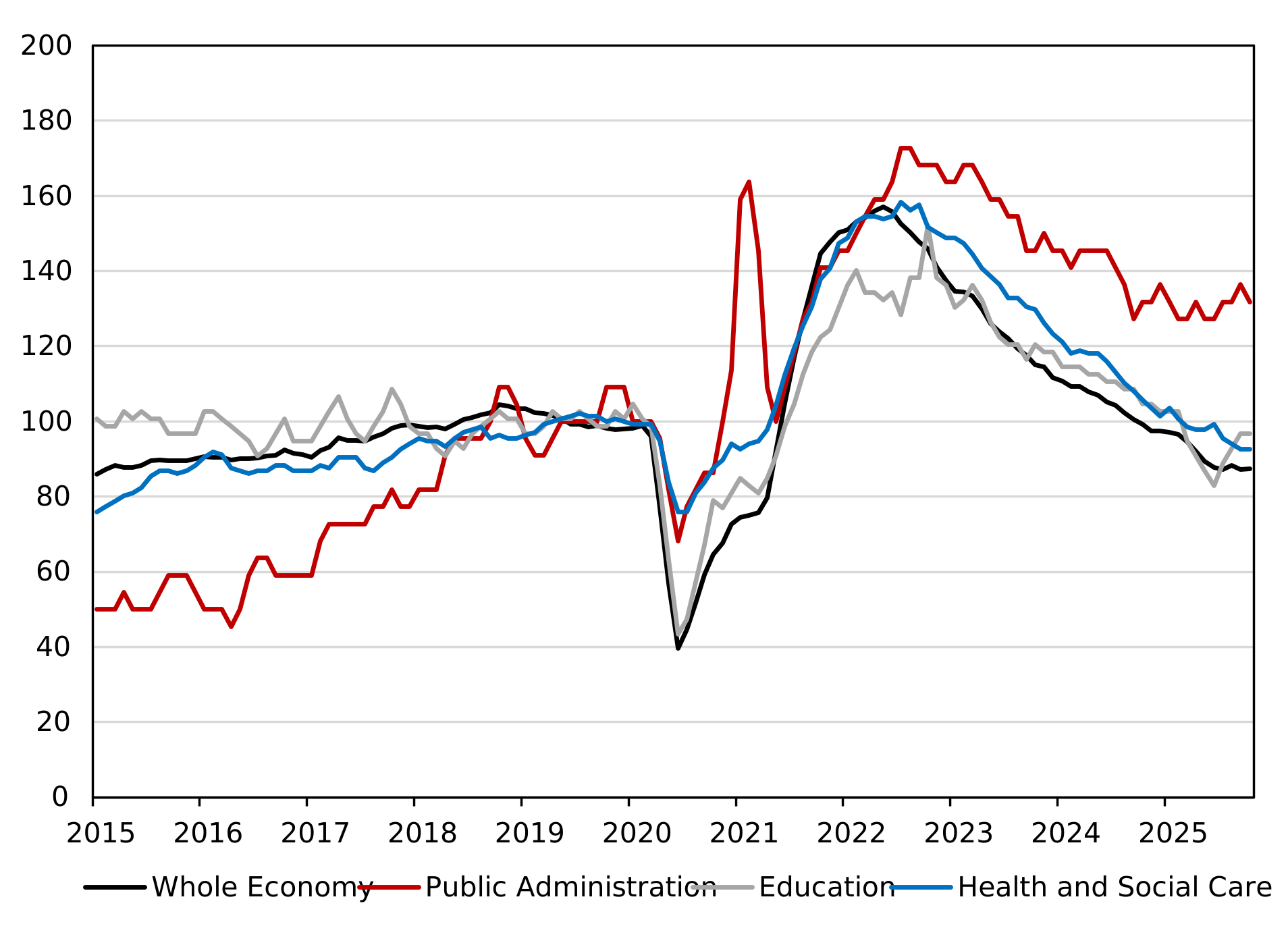
Vacancies have continued to fall over the last year, indicating falling demand for labour. The total number of vacancies has fallen by 12% over the last twelve months and now stands at its lowest level, outside the pandemic period, since 2015.
In the public sector, vacancy levels have fallen steadily from the peaks in 2022. There remains variation within the sector: vacancies in education and health and social care sectors are now below pre-pandemic levels. However, vacancies in the public administration sector remain elevated.
Business surveys also point to falling demand for labour. The index of demand for staff from the REC/KPMG Report on Jobs has fallen for 24 successive months. The ONS’s Business Insights and Conditions Survey and the Bank of England’s Decision Maker Panel data show that hiring intentions have been negative or flat throughout the year.
Vacancy levels (indexed, 2019 average =100)
Earnings Growth
There are several sources for timely estimates of earnings growth. Together, they suggest that pay growth has been easing over 2025, which is consistent with a broader loosening of labour market conditions.
Settlement data
Settlement data are the most comparable data to PRB decisions, as they are a direct measure of consolidated pay awards and are not affected by changes in working hours or workforce composition, unlike many other measures of earnings growth. Whilst settlement data can provide an indication about the near-term up to 2026, the upcoming PRB decisions are for 2026-27.
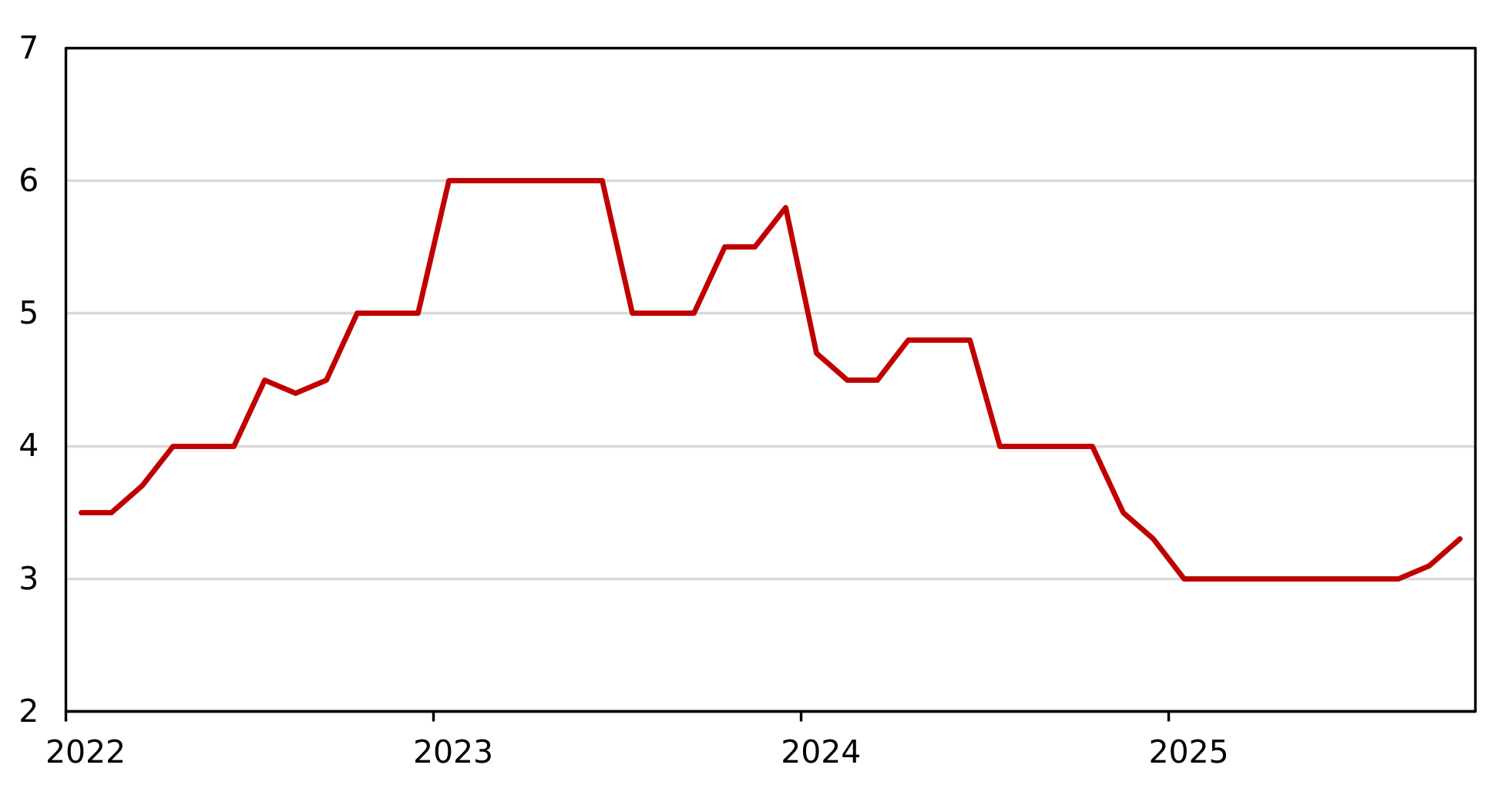
Brightmine settlement data shows that pay settlements have fallen since 2023, with median pay settlements for the whole economy at 3.0% for the majority of 2025. These have risen slightly over the last two releases to reach 3.3% in the three months to October 2025, although they remain below the 4.0% recorded in the three months to October 2024. Private sector settlements have remained low at a median of 2.5% in the three months to October 2025.
Brightmine data indicates that public sector pay settlements have been higher than private sector settlements over the past year. Private sector settlements have averaged 2.9% over 2025 so far, compared to an average of 3.6% for the public sector. The average of the PRBs’ 2025‑26 recommendations was just under 4% in cost terms.
The Bank of England Agents’ Pay Survey, which excludes the public sector, shows that wage settlements for 2025 have averaged 3.9%, which is lower than the 5.3% recorded on this measure for 2024. The Bank’s agent contacts reported in the August 2025 MPR that settlements for 2025 were in the 3.5%-4.0% range.
Figure 3.C Whole economy median pay settlements (3-month average, %)
Source: Brightmine[footnote 42]
Average Weekly Earnings (AWE)
The ONS recommends AWE data for assessing trends in near‑term earnings growth. AWE offers timely splits between public and private sectors and between total and regular pay (including and excluding bonuses, respectively). AWE is affected not only by pay awards but also by changes in working hours, overtime and workforce composition, for both public and private sectors.
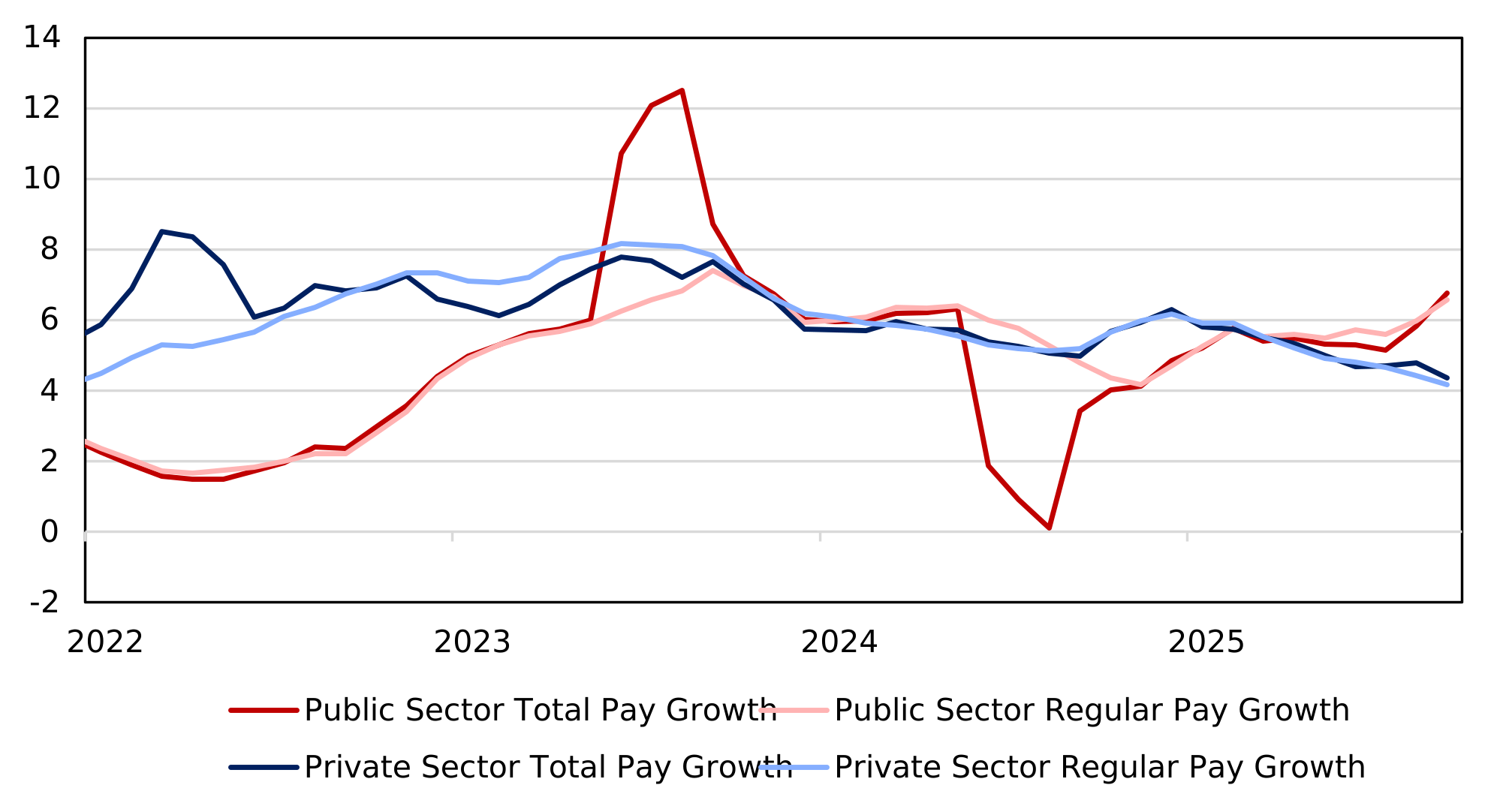
Whole‑economy total pay growth has, overall, fallen over the past twelve months and reached 4.8% in Q3 2025, well below the peak of 6.1% in Q4 2024.[footnote 43] Public sector total pay growth rose to 6.8% in Q3 2025, compared to 3.4% in Q3 2024, contributing to a rise in whole-economy total pay growth of 0.2 percentage points on the previous quarter.[footnote 44] This was driven by public sector pay settlements being awarded earlier this year than last year, which temporarily boosted annual growth.
Whole‑economy regular pay growth, which better captures underlying trends and is unaffected by the timing of bonuses, continued to ease, falling to 4.6% in Q3 2025 from 5.1% a year earlier.[footnote 45] Private sector regular pay growth has fallen for nine consecutive releases, reaching 4.2% in Q3 2025.[footnote 46] In its November Monetary Policy Report, the Bank of England estimated that an underlying measure of AWE growth was 3.9% for the three months to August, after it adjusted for volatile movements in the data.[footnote 47]
Figure 3.D Average weekly earnings total and regular pay growth (three month on year, %)
Source: ONS[footnote 48]
Other measures of wage growth
HMRC’s Pay As You Earn (PAYE) RTI data is an administrative measure covering all payrolled employees. RTI data indicate that whole‑economy mean pay growth in Q3 2025 was 5.4%, up from 4.8% in Q3 2024. As with other measures, these figures reflect the effects of the timing of recent public sector pay settlements. Mean pay growth fell to 4.0% in Q2 2025. The RTI estimate of whole‑economy median pay growth, which is available on a timelier basis, was 5.2% in the three months to October 2025, down from 6.5% in the three months to October 2024.
Labour Market Outlook
Wage growth is expected to continue to ease, consistent with the ongoing loosening of the labour market. The accelerated timing of the 2026‑27 pay round, launched two months earlier than the 2025‑26 round, means that forecasts of earnings growth and the wider labour market are particularly relevant for PRB deliberations.
Employment and unemployment
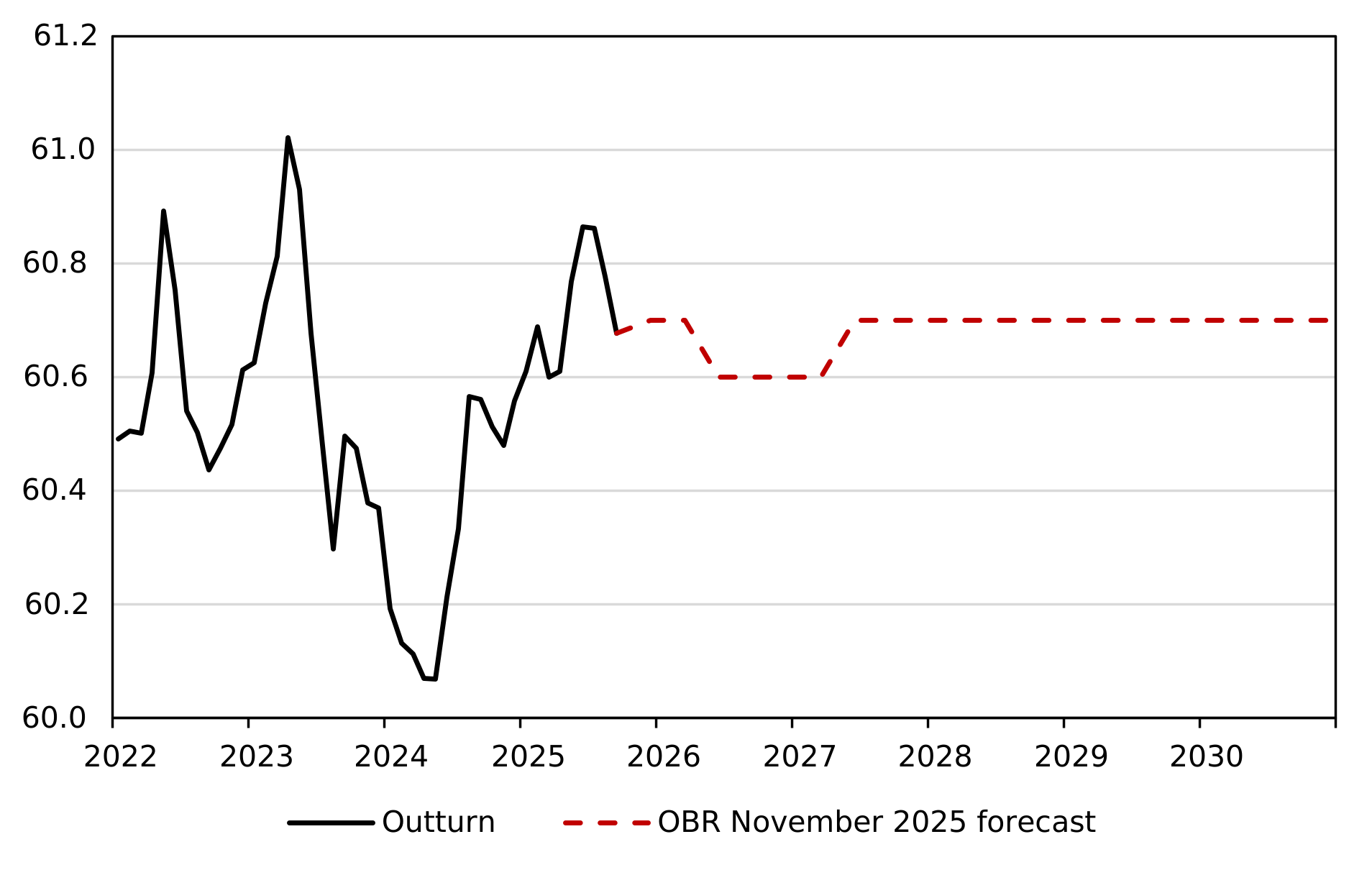
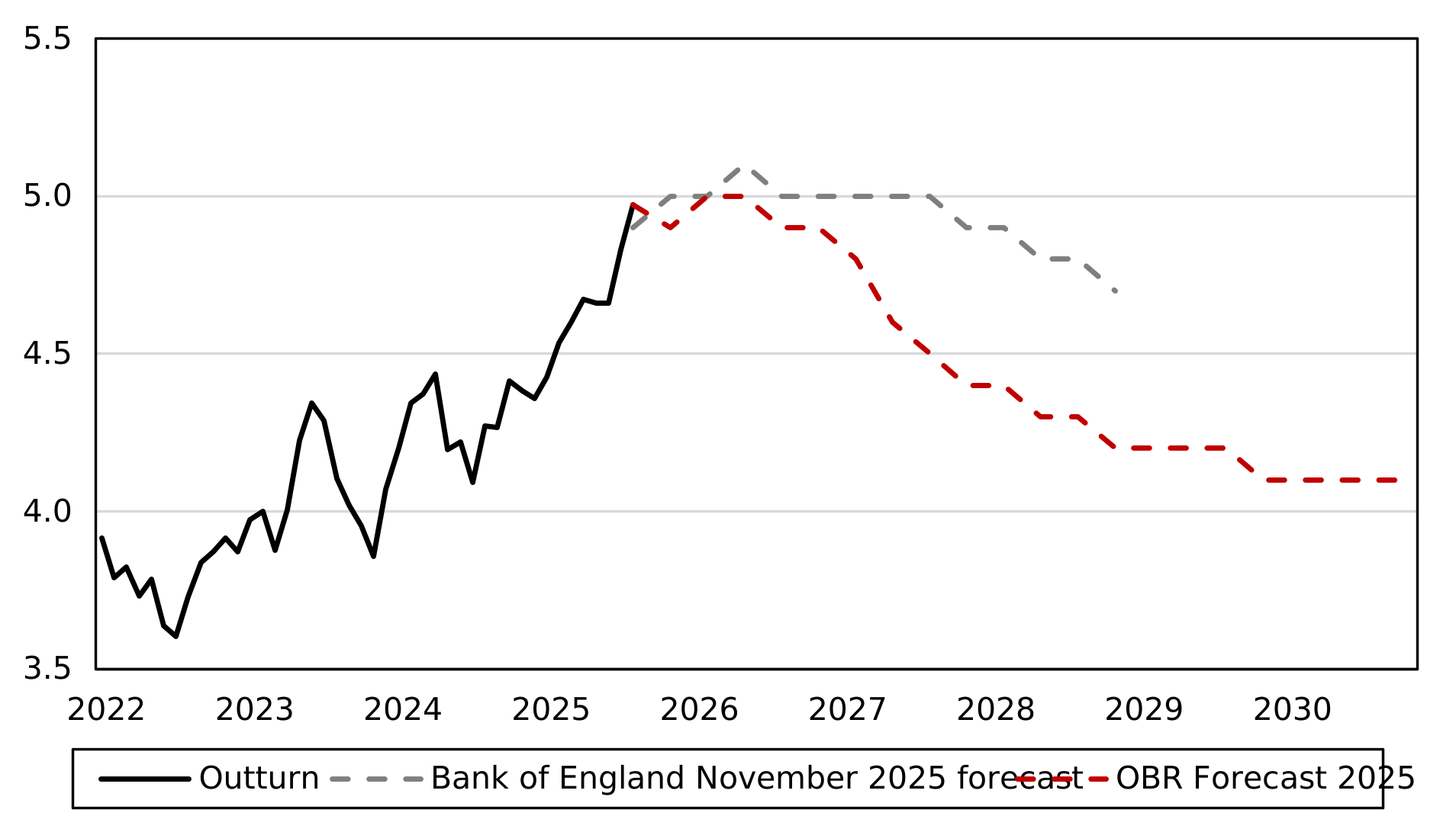
The OBR forecasts that the 16+ employment rate will fall from 60.9% in Q2 2025 to 60.6% in 2026-27 and then remain roughly stable over the next five years. The OBR also forecasts the unemployment rate to be 4.9% in 2026-27 and then gradually fall to 4.1% by the end of the forecast period. The Bank of England forecasts that the headline unemployment rate will remain at 4.8% in the medium term.
Figure 3.E Employment Rate Outturn and Forecast (16+, %)
Source: ONS, OBR November 2025 Economic & Fiscal Outlook
Figure 3.F Unemployment Rate Outturn and Forecast (16+, %)
Source: ONS, OBR November 2025 Economic & Fiscal Outlook, Bank of England November 2025 Monetary Policy Report
Earnings growth
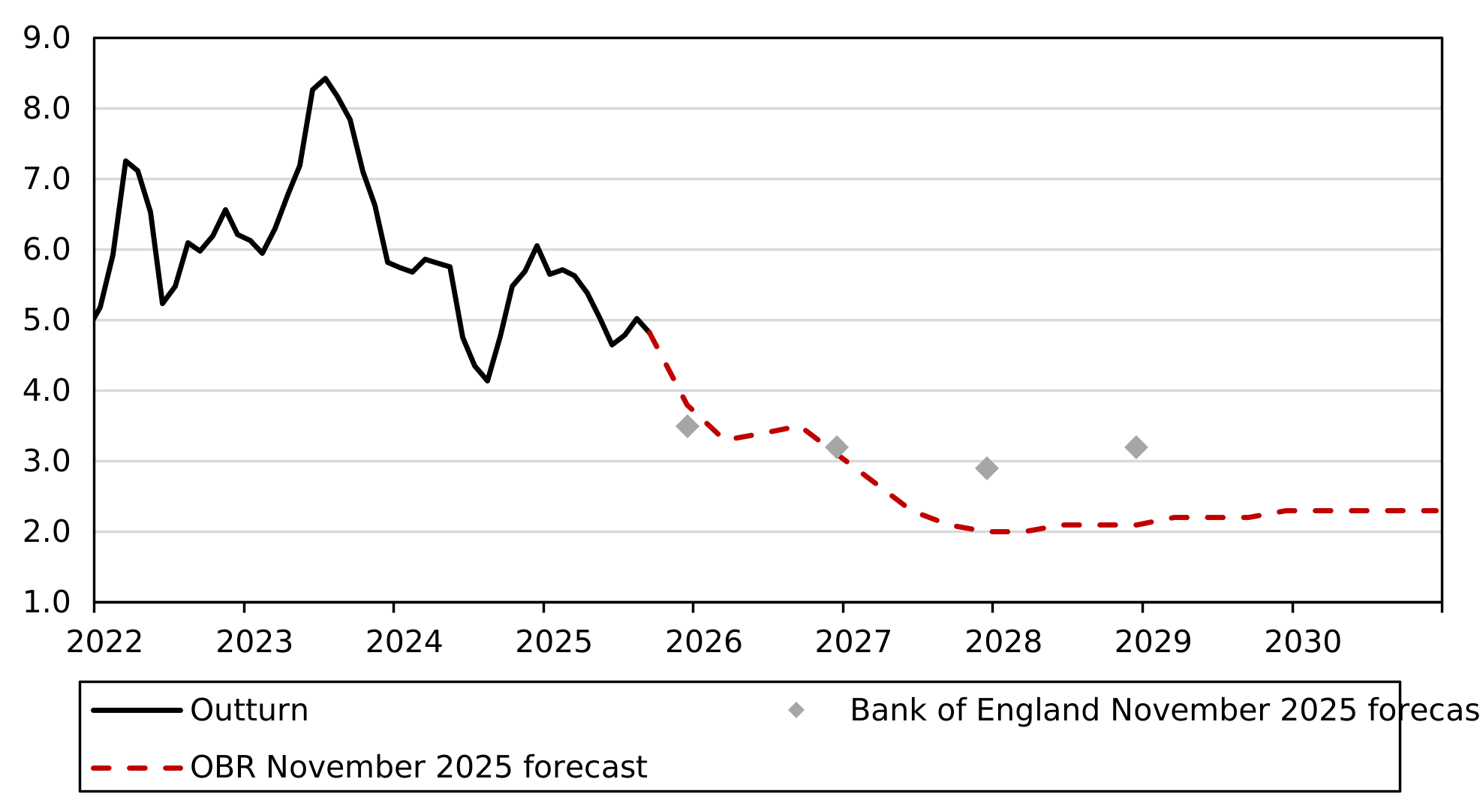
The OBR forecasts nominal average weekly earnings growth to decline to 3.2% in 2026‑27 and to remain between 2.1% and 2.3% between 2027‑28 and 2030‑31 This measure represents weekly earnings growth and is therefore affected by changes in average hours worked. The OBR forecasts average hourly earnings growth of 2.6% in 2026‑27, 2.3% in 2027‑28 and 2.2% in 2028‑29. In its November 2025 Monetary Policy Report, the Bank of England forecasts a slowing in private sector regular pay growth, reaching 3.2% in Q2 2026.
Settlement data also provides an indication for the near term forward look for pay settlements. Brightmine data shows that organisations are forecasting a median 3% pay award over the next 12 months. Evidence from the Bank of England’s Agents suggests that pay settlements will also ease further in 2026, with the most recent Agents’ report stating that early indications for 2026 could average around 3.5%.
The November 2025 Comparison of Independent Forecasts also points to an expected easing of pay growth, indicating an average independent forecast for wage growth of 4.1% in 2025, falling to 3.2% in 2026.
Figure 3.G Average earnings growth (%)
Sources: ONS, OBR November 2025 Economic & Fiscal Outlook, Bank of England November 2025 Monetary Policy Report
Public and private sector remuneration
As the private sector is an alternative source of employment for public sector workers (and vice versa), comparisons between public and private sector remuneration are important for understanding recruitment and retention trends across public sector workforces.
The Annual Survey of Hours and Earnings (ASHE) continues to be the most comprehensive source of earnings information in the UK, due to its large sample size and UK wide coverage. This section uses ASHE data as the best source of comparisons of the level of public and private sector pay, but as this data is only released annually, it does not use it to focus on recent trends.
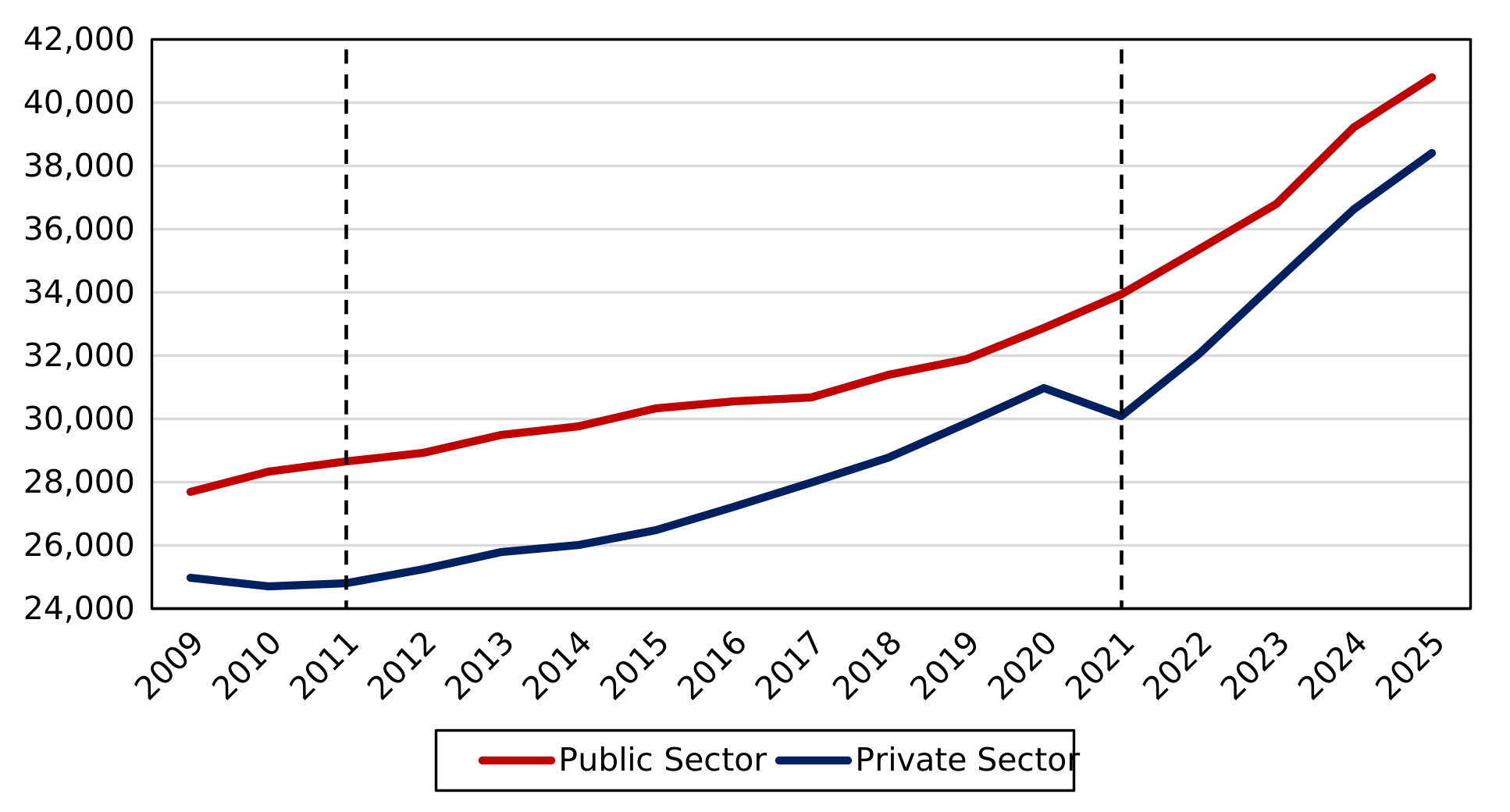
Annual pay was 6.3% higher in the public sector than in the private sector in 2025, with the latest estimates of £40,806 and £38,396 for median full-time annual earnings for public and private sector employees respectively in 2025.
ASHE provides a snapshot of pay in April each year. The 2025 provisional release therefore reflects April 2025 pay packets. It therefore includes many private sector settlements (which are most concentrated in January and April) but excludes 2025–26 PRB awards, which did not reach pay packets until later in the year, meaning the true gap between public and private sector pay may be greater than that displayed in Figure 3.H.
Figure 3.H Median annual pay across full-time employees (£)
Source: ONS Annual Survey of Hours and Earnings. Dotted lines indicate breaks in the series due to changes in occupational classifications
Simple comparisons of average pay across the public and private sectors do not account for the variation in employees’ characteristics across the two sectors. They therefore do not give an accurate sense of the different earnings potential individuals will experience between the public and private sectors. In particular, public sector workers are, on average, slightly older (indicating greater experience in the labour market) and more educated[footnote 74] than their private sector counterparts, resulting in a higher average earnings potential regardless of which sector they work in.
HMT regression analysis, using individual-level LFS data on gross hourly pay, controls for a range of observable characteristics to obtain a more robust estimate of the difference in earnings potential across the public and private sectors. In particular, this analysis controls for individuals’ sex, age, highest level of education and region, along with whether their role is temporary or permanent and full-time or part-time. More detail on the methodology used for this analysis is available in annex A.
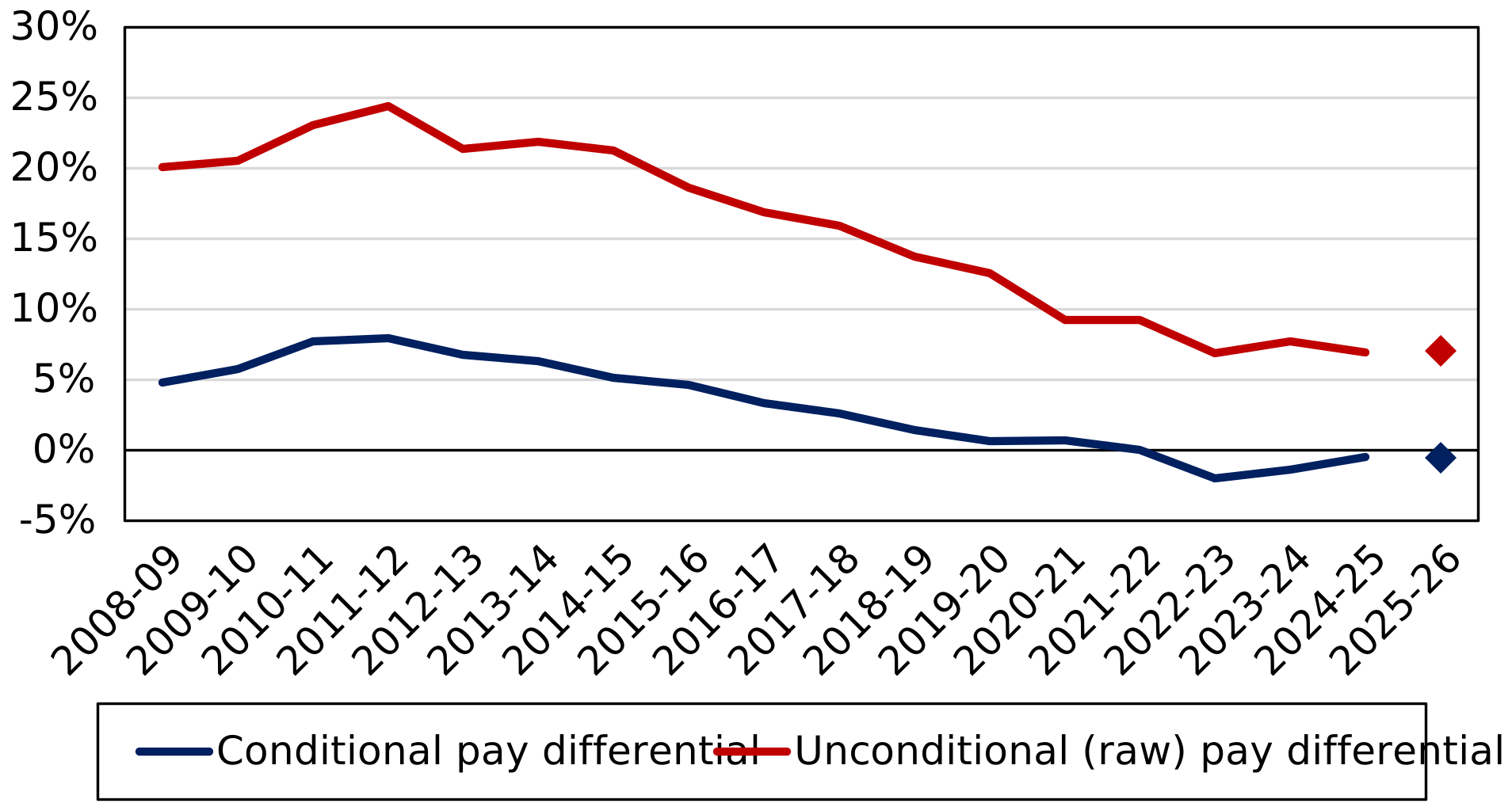
Figure 3.I shows both the raw average public-private sector pay differential (the “unconditional (raw) pay differential”) and the estimated differential when controlling for individual characteristics (the “conditional pay differential”). Both estimates are for public sector pay relative to the private sector (i.e., a positive differential implies public sector pay is above the private sector, and vice versa for a negative differential). Throughout the period of this analysis, the conditional pay differential is lower than the unconditional pay differential, implying that, on average, public sector workers have a higher earnings potential than their private sector counterparts, regardless of the sector they work in. However, the gap between the unconditional and conditional differential falls over time, indicating structural changes in the composition of employees between the two sectors.
In line with the ASHE data outlined above, this analysis suggests a narrowing of the gap between public and private sector pay levels from the early 2010s. The estimated conditional pay differential falls from 7-8% in the early 2010s to 0% in the most recent outturn data for 2024-25. The results of this analysis are broadly consistent with those from the Institute for Fiscal Studies (IFS) and the Resolution Foundation, who also find a fall in the pay differential from the early 2010s, and that the conditional differential becomes negative in the early 2020s.
The diamonds in Figure 3.I update HMT’s analysis of the average differential after accounting for 2025-26 average pay awards and the OBR’s earnings forecast for 2025-26. As set out in annex A, given the average public sector pay awards, evidence on typical pay drift in the public sector and the OBR’s earnings forecast, the diamonds suggest the conditional public-private sector pay differential would remain broadly unchanged, meaning that workers with similar observable characteristics will, on average, earn roughly the same across the public and private sectors. More detail on the assumptions underpinning this is available in annex A.
Figure 3.I Estimated public and private sector hourly pay differential (%)
Source: Internal analysis using ONS LFS microdata
The methodology used to produce the diamonds replicates the methodology in HMT’s Economic Evidence to the Pay Review Bodies for the 2025-26 pay round. That methodology, which compares public sector pay awards to earnings forecasts, suggests that there may be minimal change in the public-private sector pay differential. However, that methodology does not directly use recent labour market data on public sector pay growth relative to private sector pay growth.
Recent labour market data suggest public sector pay has been rising faster than private sector pay. Regular pay growth in the public sector (excluding financial services) in Q2 2025 was 6.1%, relative to private sector regular pay growth of 4.8%. In Q3 2025, the equivalent figures were 7.1% (in the public sector, excluding financial services) and 4.2% in the private sector. However, the Q3 2025 figures (which exclude arrears and bonus payments but will reflect rises in base pay) are impacted by bringing forward the pay round. A methodology that puts greater weight on the pay growth public and private sector workers have received over the first six months of the year could predict that public sector workers will receive higher pay increases over 2025-26 than the methodology used to produce the diamonds above.
Pensions
The evidence above only accounts for pay, but pensions are also a key part of the overall remuneration package that workers receive. Public service pension schemes remain among the most generous schemes available in the UK.
Over 80% of public sector workers are part of defined benefit schemes in which employers typically contribute around 20% of earnings for future service (as of the 2020 valuations). This compares to most private sector employees who receive defined contribution pensions, and for whom employer contributions are significantly lower, with most (over 80%) employees receiving less than 10% employer contributions.
Under defined contribution schemes, volatility in investment returns can affect pension outcomes for members, in contrast with the more stable level of pensions members can expect in the current public service schemes.
Excluding pensions can significantly understate the value of public sector remuneration relative to the private sector. For example, the IFS estimated in 2022 that including pensions in its analysis would significantly increase the conditional differential between public and private sector remuneration by around 9 percentage points.
4. Fiscal policy
Overview
The government has set out an economic and fiscal plan underpinned by the principles of stability, investment and reform that will enable the conditions for sustainable growth and reduce the cost of living.
To deliver stability, the government has set out clear fiscal rules and is delivering a current budget surplus and a reduction in net financial debt this Parliament. This is crucial to reduce the amount spent on debt interest rather than on public services.
The government is meeting its fiscal rules and reducing borrowing as a share of GDP in every year of the forecast, but this has required choices on tax and spend.
The government has already set departmental budgets for 2026-27, 2027-28 and 2028-29. Budget 2025 announced that the government will seek to make further savings and efficiencies of £2.8bn in 2028-29, rising to £4.9bn in 2030-31. This approach will require trade-offs in non-pay budgets, which would be exacerbated if pay costs were increased above what departments have outlined as affordable during this pay round.
The new savings and efficiencies target on SR25 budgets was confirmed at Budget 2025 and constitutes new information since departments’ pay affordability submissions, further constraining what is affordable on pay. Continuing the approach introduced last year, departments will not be given additional funding for pay awards. Should the PRBs’ recommendations exceed the affordability figures set out in written evidence, departments will have to carefully consider if further efficiencies or cuts are possible, and recommendations will have to be rejected if they prove unaffordable.
Fiscal context
The government’s fiscal strategy is to reduce borrowing and debt by meeting its fiscal rules. Debt servicing costs were over £100 billion in 2023-24 and 2024-25. £1 in every £10 of public sector spending goes on servicing previously borrowed money instead of supporting public services or investment. This is roughly equivalent to four times the amount currently spent on nurses employed in the hospital and community health sector.
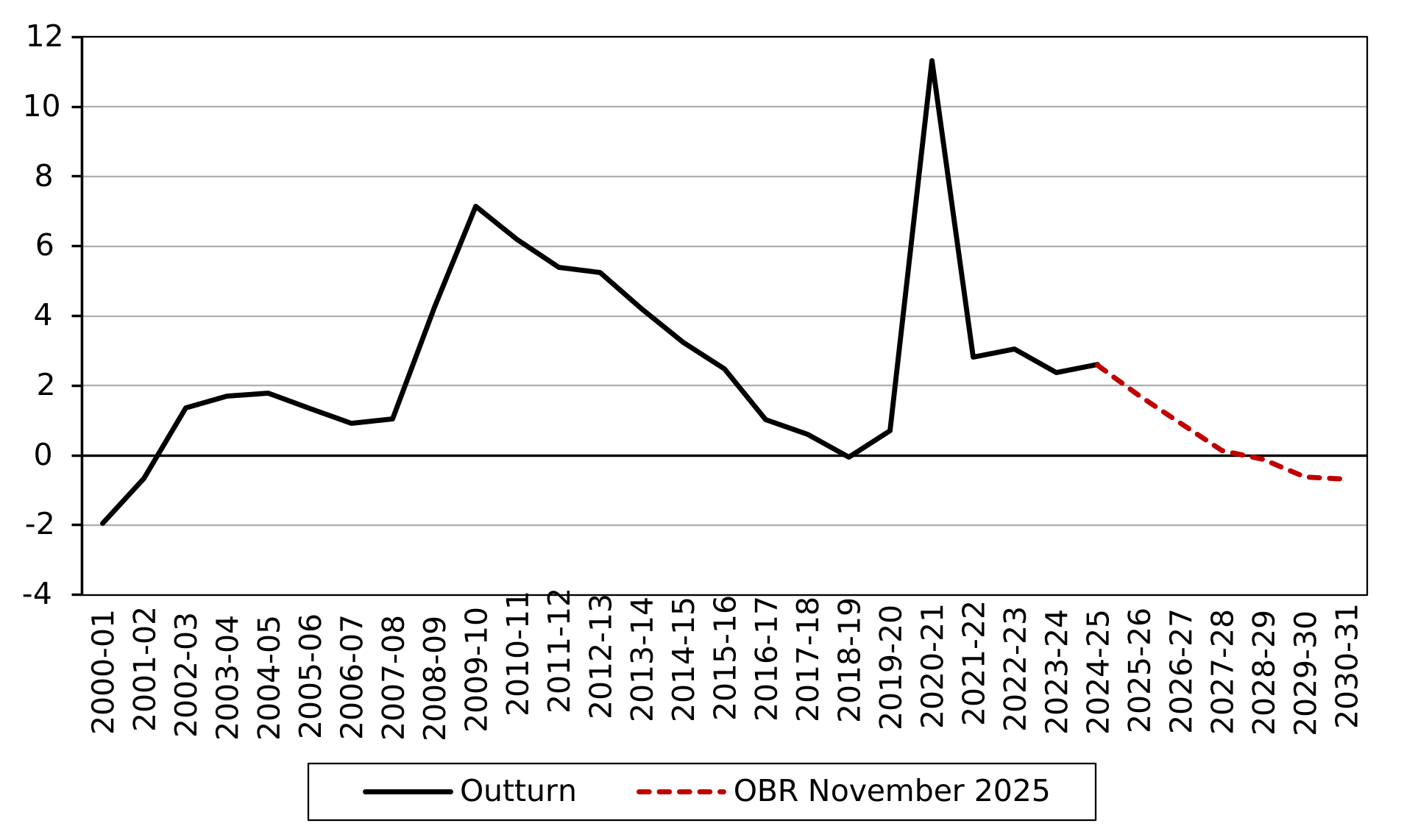
The Budget increased the buffer against the stability rule to make the public finances more resilient. That means it is less likely that tax and spend plans will need to change in response to changes in the economy. But the public finances remain vulnerable to movements in interest rates. OBR sensitivity analysis suggests that a one percentage point increase in the Bank Rate and gilt yields would reduce the current surplus by £17 billion in 2029-30, reducing headroom to record low levels.
Figure 4.A: Current budget deficit, %GDP
Sources: OBR November 2025 Economic & Fiscal Outlook
Responsible decisions for stability and growth
While the government is maintaining public investment at the highest sustained level in four decades, day-to-day budgets will continue to be tight. The government is committed to living within the spending envelopes set out at Budget 2025. From 2028-29, all departments will make additional savings and efficiencies equivalent to 0.5% of their Resource Departmental Expenditure Limit (RDEL) budgets, with the NHS and the Ministry of Defence allowed to retain and reinvest savings to improve patient care and protect national security. This results in £2.8bn of savings and efficiencies in 2028-29, rising to £4.9bn by 2030-31.
The government has also made the fair and necessary decisions on tax to live within the rules. The Budget announced responsible tax decisions to raise £23.2 billion in 2029-30. As the OBR set out in its Economic and Fiscal Outlook, the tax-to-GDP ratio is forecast to increase to a post-war high of 38.3% of GDP in 2030-31.
In line with the government’s focus on fiscal restraint, and following the inheritance of £22bn of spending pressures in 2024-25, the government has made a renewed effort to significantly reduce the use of the Reserve for routine departmental spending. Instead, the Reserve will return to its intended use for managing a limited number of unforeseeable, unavoidable pressures that departments cannot otherwise absorb, as set out in Consolidated Budgeting Guidance. Public sector pay awards do not meet these criteria.
As it did in 2025-26, the Treasury has also set a much smaller Reserve over Phase 2 of the Spending Review. At £4.4 billion, the RDEL Reserve for 2026-27, which forms 0.8 per cent of total RDEL, is only a third of the 2.4 per cent Reserves set aside at Spending Review 2021. Any payments made from the Reserve will also be required to be repaid in future years.
In recent years, pay awards were often funded by switching funding from capital budgets into resource budgets, reducing the amount of funds available for public investment. The government has changed the fiscal rules to remove the incentive to make these kinds of switches, and has explicitly ruled them out from 2025-26 in Consolidated Budgeting Guidance.
These changes mean that, as was the case in 2025-26, if departments are unable to absorb 2026-27 PRB recommendations in full from within their existing budgets, they will not be able to accept them.
Departments have set out their affordability positions in their written evidence to the PRBs. Each one percentage point pay increase across all PRB workforces costs an estimated £2.1 billion over a full pay year. If awards are recommended above the level that departments have provisioned for within their budgets, the departments in question will need to reflect carefully on whether these additional costs can be borne through offsetting savings on non-pay expenditure, including on frontline services. Departments will also need to consider the impact on their budgets beyond 2026-27, given that pay costs are recurring.
5. Conclusion
The government continues to operate in a challenging fiscal environment. Over the past two years, the government has made difficult but necessary decisions to deliver above-inflation, real terms pay increases for the vast majority of PRB workforces, reflecting the value placed on public sector workers. These decisions have required difficult trade-offs across wider public spending priorities.
At the same time, the government has taken further steps across tax, spending and welfare to strengthen public finances and lay the foundations for sustainable economic growth. The fiscal context remains tight, with departmental budgets set at the Spending Review and departments expected to manage pay within these allocations. As set out at the recent Spending Review, no additional funding will be provided for pay beyond what has already been allocated in existing settlements. Budget 2025 further announced that the government will seek to make further savings and efficiencies from 2028-29 onwards, representing 0.5% of departmental budgets set at Spending Review 2025.
Departments have set out their affordability positions, taking into account the latest economic forecasts. If recommended pay awards exceed what has been budgeted for, departments will need to meet the associated costs either through offsetting savings from elsewhere or through productivity improvements. If departments are unable to absorb 2026-27 PRB recommendations in full from within their existing budgets, they will not be able to accept them. Departments will also need to consider the impact on their budgets beyond 2026-27, given that pay costs are recurring.
PRBs are asked to take full account of the latest data and forecasts for wage growth across the wider economy, which is expected to decline further in 2026-27 due to the loosening seen in the wider labour market. The OBR is forecasting average weekly earnings growth of 3.2% and hourly earnings growth of 2.6%. Inflation is also expected to fall, partly as a result of the action the government took at Budget 2025. The OBR forecasts CPI inflation to be 2.2% in 2026-27. The earlier start of this year’s pay round provides an opportunity for timely and evidence-based recommendations that reflect both the economic outlook and the constraints on public spending.